From the clinic
Brushing and flossing so your check-ups stay short
Most of what keeps a mouth healthy happens at home, two minutes at a time. Here is the routine your dentist hopes you follow.

- Published
- 10 September 2026
- Topic
- Dental tips
- Reading time
- 4 min read
- What to expect
- General advice, not a replacement for a check-up
A short, calm check-up is usually the sign of a good routine at home. Nothing about that routine is complicated. It is the small details, done every day, that keep plaque from turning into gum trouble and decay.
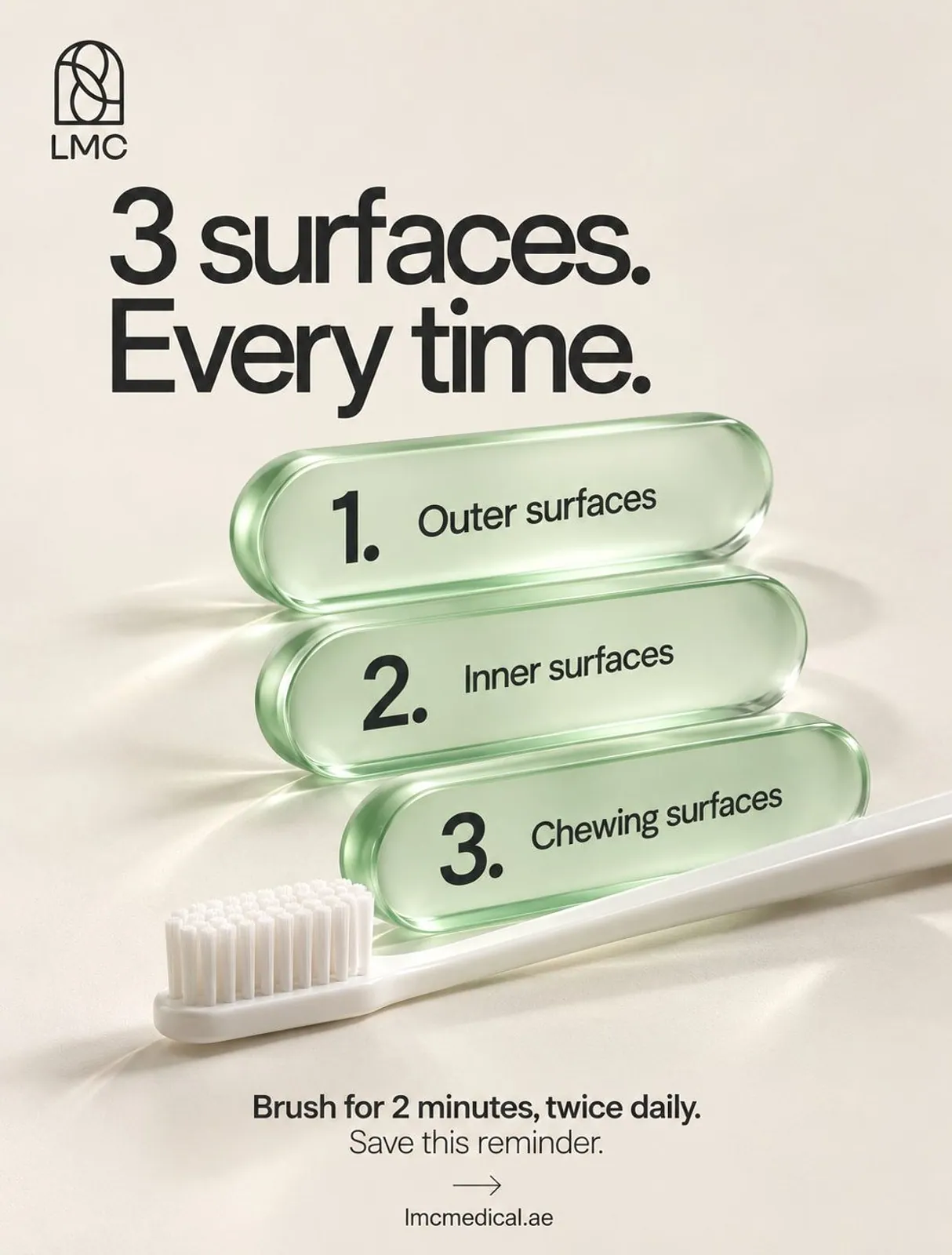
Brushing: two minutes, twice a day
Use a soft-bristled brush, manual or electric. Hard bristles do not clean better; they wear the enamel and push the gums back. Hold the brush at about a 45-degree angle to the gum line and move it in small circles or short strokes, so the bristles sweep where the tooth meets the gum. Work your way around the mouth in a set order so nothing is missed: outside, inside, then the chewing surfaces. Two minutes feels long at first. A timer or a song helps.
Use a fluoride toothpaste and spit, but do not rinse with water afterwards. Rinsing washes the fluoride away before it can do its job.
Flossing once a day
A brush cannot reach between teeth, and that is where many cavities and most gum problems start. Floss once a day, ideally before bed:
- Take a length of floss and wind it around your middle fingers.
- Guide it gently between two teeth. Do not snap it down into the gum.
- Curve it into a C shape against one tooth and slide it up and down, just under the gum line.
- Repeat on the neighbouring tooth, then move on with a clean section.
If your gums bleed a little when you start, keep going gently. It usually settles within a week or two. If it does not, tell your dentist.
Small habits that add up
- Brush your tongue, or use a scraper. It carries a lot of the bacteria behind bad breath.
- Replace your brush, or brush head, every three months, or sooner if the bristles splay.
- Keep sugary snacks and drinks to mealtimes rather than grazing through the day.
- Drink water after meals when you cannot brush.
The six-monthly clean
Even with a good routine, some plaque hardens into tartar that only a professional clean can remove. A visit every six months lets the dentist clear it, check the gums and catch small problems while they are still small. People with gum concerns or a lot of dental work may be asked to come more often.
This advice is general and does not replace an examination. If anything here does not fit your situation, ask your dentist at LMC, or message the clinic on WhatsApp.
General advice to help you understand your health. Your dentist or clinician will tell you what applies to you.
Your smile journey starts here
Questions about this? Just ask.
Tell us what is bothering you. We will tell you honestly what will help and what you can skip.